


Dryer Runs, Clothes Stay Damp: What’s Going Wrong?
Wet clothes after a full dryer cycle don’t always mean the dryer is broken. A few simple checks can help narrow down the cause.
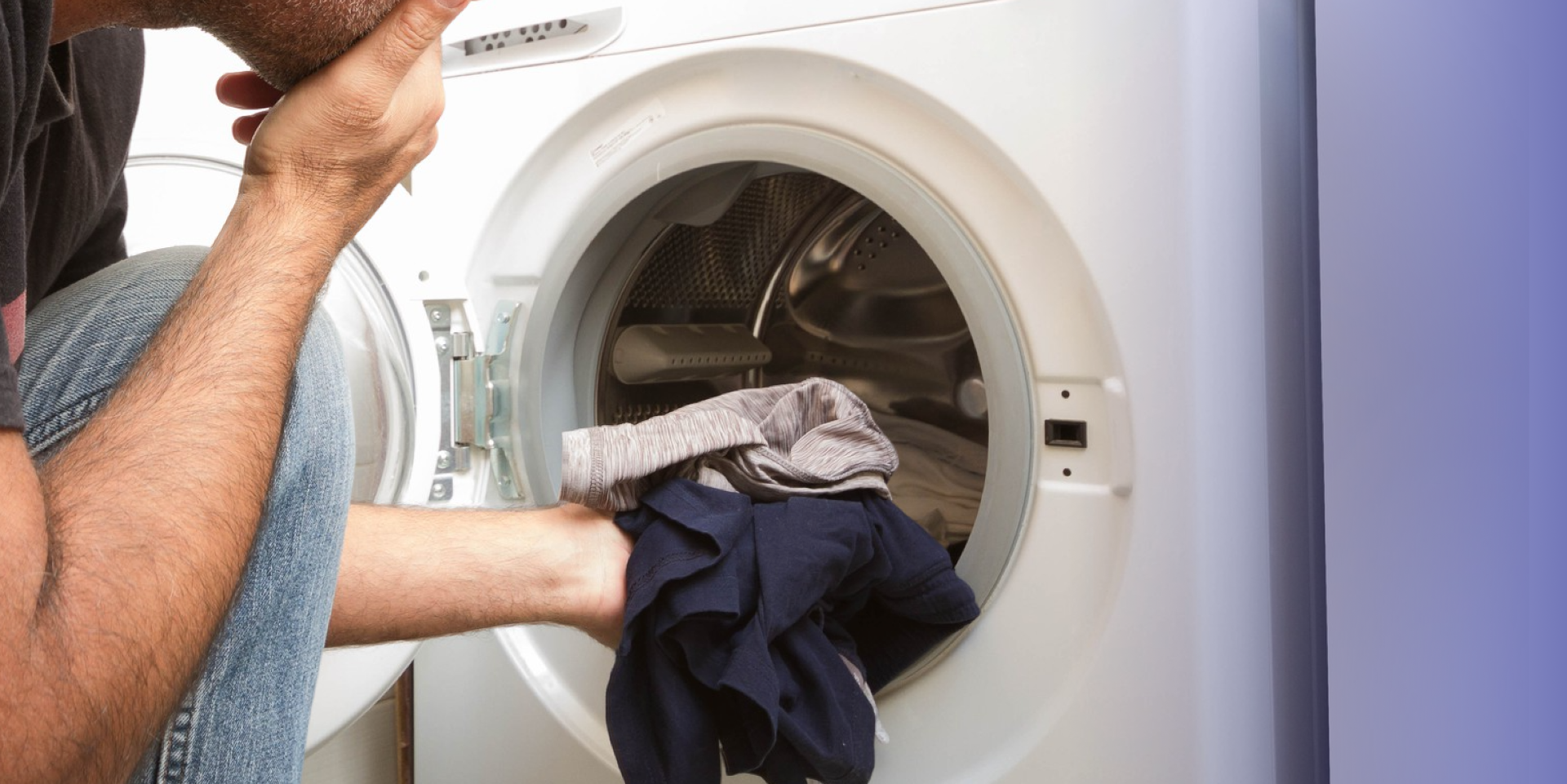

Illustration of clothes that are still wet or clothes that smell bad after washing. Maybe an illustration of someone taking wet clothes out of the dryer or someone smelling them with an ick expression.
Finding damp clothes at the end of a full dryer cycle can indicate several problems. The problem may stem from the load size, dryer settings, restricted airflow, or even how much water the clothes retained before going into the dryer.
In other cases, the dryer may not be producing enough heat at all. Before checking any possible causes, first determine whether the dryer is actually heating. The answer will help narrow down which troubleshooting steps to focus on next.
First, Check Whether Your Dryer Is Heating
Before checking anything else, find out whether the dryer is actually producing heat.
- Select a heated timed cycle
- Run the dryer empty for about 5 minutes
- Open the door and carefully check whether the inside of the drum feels warm
If the drum feels warm, the dryer is producing heat. Focus on factors that can affect drying performance, such as load size, dryer settings, airflow, or the moisture sensor.
If the drum stays cool, move to the no-heat checks instead. The problem may be related to the selected cycle, the power or gas supply, or an internal heating component.
If the Dryer Heats but Clothes Are Still Damp
If the drum feels warm but your clothes are still damp after a full cycle, it means the dryer is producing heat. The problem may be related to the load, cycle settings, moisture sensors, or airflow through the dryer.
Start with the laundry itself before checking the machine.
1. Check the Load Size
A dryer needs enough open space for clothes to tumble and for warm air to move through the load. Packing the drum too tightly can leave some items damp, especially heavier pieces trapped in the middle. Bulky or thick items such as comforters, blankets, jeans, hoodies, and bath towels may also need more drying time. Try a smaller load or dry heavier items separately.
2. Check How Wet the Clothes Are Before Drying
Sometimes the dryer is getting blamed for a problem that starts in the washer. If clothes come out of the washer soaking wet or dripping, the washer may not be removing enough water during the final spin. Check the washer’s spin setting, load balance, and drainage if your laundry feels unusually wet before it even reaches the dryer.
3. Check the Dryer Cycle and Settings
Different dryer cycles are designed for different results. Timed Dry runs only for the time you select, while Less Dry or Damp Dry settings may stop while some moisture remains in the fabric. Delicate and Low Heat cycles also dry at lower temperatures and may need more time. Before running another cycle, make sure the selected setting matches the size and type of laundry in the drum.
4. Clean the Lint Screen and Check the Vent
Your dryer needs airflow as much as it needs heat. A clogged lint screen, crushed vent, or buildup inside the exhaust system can prevent moist air from leaving the dryer efficiently.
Clean the lint screen and inspect the vent behind the dryer for kinks or crushing. You can also check the exterior vent while the dryer runs. Weak airflow outside may mean the vent system needs cleaning.
5. Check the Moisture Sensor
Automatic and Sensor Dry cycles use moisture sensors to determine when the laundry is dry enough to stop the cycle. Residue from dryer sheets or fabric softener can build up on the sensor and interfere with its readings.
Check your dryer’s manual to locate the moisture sensor and follow the recommended cleaning instructions. If clothes dry normally on Timed Dry but repeatedly stay damp on Sensor Dry, the sensor system may need further inspection.
If Your Dryer Is Not Heating
If the drum stays cool during the heating test, the dryer may not be getting the power or fuel it needs to produce heat. Start with the external supply before assuming a part inside the dryer has failed.
1. Check the Power Supply or Gas Valve
For an electric dryer: check the circuit breaker even if the drum still turns. An electric dryer can sometimes run without producing heat when part of its power supply is interrupted. Reset the dryer breaker according to your electrical panel instructions. If the breaker trips again, stop resetting it and have the dryer or electrical circuit inspected.
For a gas dryer: make sure the gas shutoff valve is open and the dryer is receiving gas. If you smell gas, stop using the dryer, leave the area, and contact your gas utility from a safe location.
2. The Problem May Be Inside the Dryer
If the dryer has the correct power or gas supply but still does not heat, an internal component may be causing the problem. Depending on the model, possible causes include the heating element, thermal fuse, thermostat, igniter, or other parts involved in producing and controlling heat.
Identifying the failed component usually requires testing inside the dryer. A professional technician can inspect the heating system and determine which part actually needs repair or replacement.
Is It Time to Repair or Replace Your Dryer?
If you've worked through the basic checks and your dryer still isn't heating or drying properly, the next step is to find out whether the problem is worth repairing. A technician can help identify the failed component and give you a clearer picture of the repair cost.
Before paying for service, check whether your dryer is still covered by the manufacturer's warranty. If the problem may be covered, contact the manufacturer or an authorized service provider first.
If the dryer is no longer under warranty, compare the repair cost with the machine's age, overall condition, and repair history. A newer dryer with a single isolated problem may still be worth fixing, while an older machine with recurring issues may be a better candidate for replacement.
If replacement makes more sense, consider the capacity, fuel type, dimensions, and drying features that fit your household. Browse dryers at AM Direct Appliances to compare models and find an option that fits your laundry space and budget.
Written by
Athena Buenrostro
Owner
This author is a contributor at AM Direct Appliances INC.